BACKGROUND
Reactive Infectious Mucocutaneous Eruption (RIME), formerly known as Mycoplasma-induced rash and mucositis (MIRM), describes a mucosal-predominant inflammatory reaction triggered by a variety of infectious agents. While Mycoplasma pneumoniae remains the most frequently identified cause, other pathogens—including Chlamydophila pneumoniae, Streptococcus pyogenes, influenza virus, adenovirus, enteroviruses, and SARS-CoV-2—have been implicated.1–4 Clinically, RIME is characterized by prominent mucositis affecting oral, ocular, and genital mucous membranes, often with minimal skin involvement.
In children and adolescents, particularly those around 10–14 years old, RIME typically follows a brief prodrome of respiratory symptoms and resolves with supportive care.5 In adults, presentations are less common but may be more severe, sometimes lacking respiratory antecedents and requiring systemic therapy.6 Pediatric cases usually respond to supportive care—hydration, pain control, topical corticosteroids, and ocular lubrication—with hospitalization warranted for severe mucositis or dehydration risk. In adults, mucosal inflammation is often more extensive and prolonged, prompting earlier use of systemic corticosteroids or adjunctive immunomodulators.7 Antibiotics are indicated only when an active bacterial infection such as M. pneumoniae is confirmed, as their use does not hasten mucosal healing.8 Prevention is challenging, but increased awareness among clinicians may reduce misdiagnosis and avoid unnecessary aggressive treatments reserved for Steven Johnson Syndrome/Toxic Epidermal Necrolysis (SJS/TEN), which tends to be more related to medication usage and can be differentiated by its diffuse skin involvement that is typically not seen in RIME. This case demonstrates a rare adult case of RIME secondary to mycoplasma infection with severe mucositis and pharyngeal ulcers requiring use of systemic steroids.9
CASE PRESENTATION
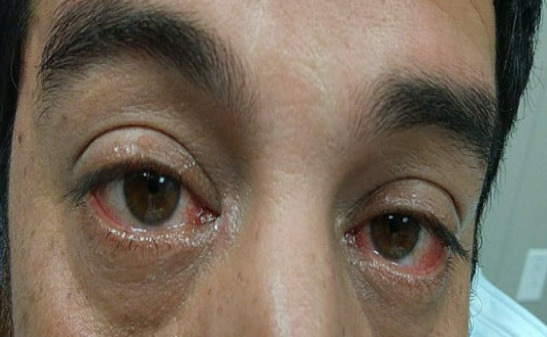
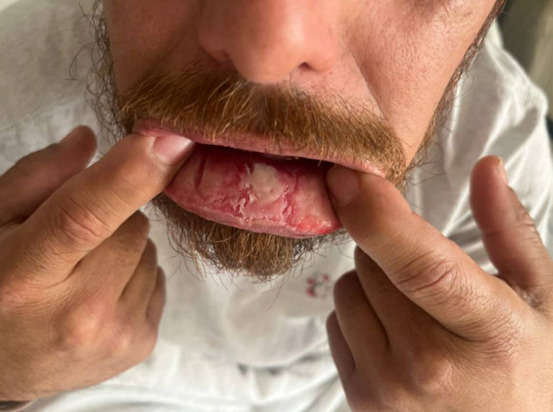
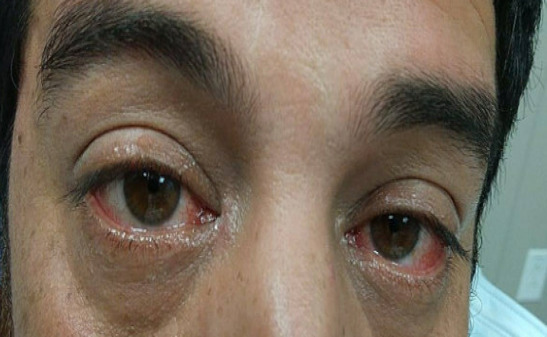
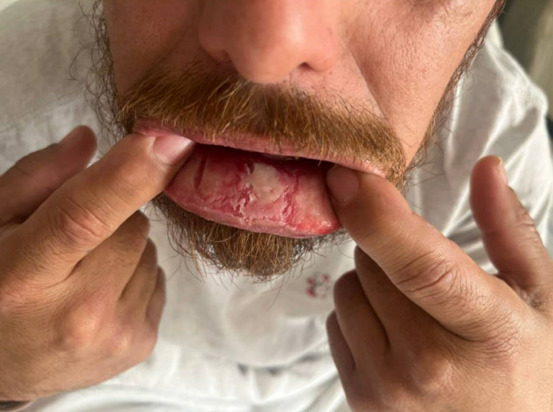
Patient was a 39-year-old male with no past medical history and currently not on medications who presented after 10 days of upper respiratory infection symptoms. He had oral mucositis and bilateral conjunctivitis without discharge onset the previous night with associated posterior pharyngeal ulcers without notable dysphagia (Figures 1 & 2). He denied any recent travels. Sick contacts included his wife who had pneumonia over a week ago and his child who currently had upper respiratory symptoms.
In the emergency department, he was febrile at 101.7F and tachycardic in the at 110 bpm. Physical exam was significant for bilateral conjunctival erythema without discharge, oral mucositis and posterior pharyngeal ulcers. There was no genital involvement. Labs were significant for mild leukocytosis of 13.1. Complete respiratory viral panel was performed resulting in coinciding Mycoplasma and Rhino/Enterovirus infection. His chest x-ray was normal. He was given resuscitative fluids, systemic steroids, and Azithromycin. He was admitted to the hospital service.
During the hospital stay, infectious disease was consulted and recommended further infectious workup with HIV and syphilis screening, which were both negative in this patient. Blood cultures and cultures of the ulcer were negative. There was low suspicion of SJS/TEN due to patient’s lack of medication use and lack of diffuse skin involvement. He was continued on systemic steroids for five days for his mucositis/pharyngeal ulcers and discharged after one day with instructions to complete the three-day course of 500mg Azithromycin daily.
DISCUSSION
Reactive Infectious Mucocutaneous Eruption (RIME) is increasingly recognized as a distinct clinical entity, separating it from the more severe spectrum of SJS/TEN.1,2 The hallmark features of RIME are prominent mucosal involvement—most often oral, ocular, and occasionally genital—with minimal or absent skin rash.7 The most common trigger remains Mycoplasma pneumoniae, but multiple viral and bacterial pathogens have been reported. Coinfections, such as the M. pneumoniae and rhino/enterovirus dual positivity in this patient, are uncommon but may complicate clinical presentation and immune response.4 Coinfecting pathogens can synergistically stimulate the immune system, leading to excessive cytokine release and mucosal inflammation. In some cases, overlapping immune responses can lead to immune dysregulation, resembling SJS/TEN rather than classic RIME.10
Although RIME occurs predominantly in children and adolescents, adult presentations, as in this case, may be more severe, protracted, and less frequently preceded by respiratory symptoms.6,11 In adults, RIME is rare, with very few documented reports but is known to be more prevalent in immunocompromised patients. Adult patients are also more likely to require systemic corticosteroids for symptom control, potentially due to a more robust or dysregulated immune-mediated inflammatory response.12 In our patient, significant mucosal pain and risk for functional limitation justified early systemic steroid initiation, which led to rapid clinical improvement.
Differentiating RIME from SJS/TEN and other diseases is essential to avoid unnecessary cessation of non-culprit medications and to prevent overuse of aggressive therapies intended for those syndromes.1 Unlike SJS/TEN, RIME is not associated with widespread epidermal necrosis, does not follow drug exposure, and generally carries a favorable prognosis with supportive care.9,13 Further testing for HIV and Syphilis should also be considered. A person with HIV can be predisposed to more severe or atypical mucocutaneous eruptions and can also broaden the differential to aphthous ulcers, HSV, drug eruptions, erythema multiforme, or SJS/TEN. Syphilis can mimic RIME with oral/genital mucositis, rash, and systemic symptoms. Nevertheless, misclassification remains a risk, particularly in atypical or adult presentations.
The role of antibiotics in RIME is pathogen-specific. While macrolides are appropriate for confirmed M. pneumoniae infection, they have not been shown to alter the course of mucositis once the inflammatory process is established.8 Supportive measures—including adequate hydration, analgesia, and ocular protection with lubricating drops or steroid eye drops if moderate to severe involvement—remain the mainstay of therapy.7,12 In this case, azithromycin was indicated for M. pneumoniae infection, but systemic corticosteroids were key in improving mucosal symptoms and preventing further morbidity. If symptoms are mild with minimal mucosal involvement, treatment can be considered as an outpatient with cautionary instructions for patient to return if there are any new or worsening symptoms causing functional limitations such as dysphagia that could lead to rapid dehydration.
Long-term sequelae of RIME are rare, but recurrence has been reported, particularly with re-exposure to triggering pathogens.5,11 Clinician awareness of RIME, especially in adult patients, is important for timely diagnosis, judicious therapeutic decision-making, and avoidance of unnecessary drug cessation or escalation of care.1,14
CONCLUSION
In our case—a 39-year-old adult with severe oral and ocular mucositis, pharyngeal ulceration, and confirmed M. pneumoniae co-infection with Rhino/Enterovirus—early initiation of systemic corticosteroids, alongside targeted antibiotic therapy, facilitated rapid improvement and recovery. The presentation aligned with RIME’s distinguishing features and highlights the importance of timely diagnosis and differentiation from SJS/TEN and other diseases such as HIV or Syphilis to avoid unnecessary discontinuation of medications or over-treatment.